Enzyme Activity and Inhibition Assays
Understanding Enzymatic Function and Its Role in Pharmaceutical Discovery
Enzymes are essential biological catalysts that regulate a wide range of biochemical reactions involved in cellular metabolism, molecular signaling, energy production and physiological regulation. Their activity is fundamental to maintaining biological functions, while alterations in enzymatic processes may contribute to the development and progression of numerous diseases.
Enzyme activity and inhibition assays are important experimental approaches used to investigate catalytic functions, characterize enzyme-substrate interactions and evaluate the effects of potential inhibitory compounds. These techniques provide valuable information during biochemical research, therapeutic target validation and pharmaceutical discovery.
In drug development, enzyme inhibition studies are particularly relevant because many therapeutic compounds exert their biological effects by modulating specific enzymatic activities. Understanding how molecules interact with enzymes helps researchers investigate their pharmacological properties, determine inhibitory potency and identify potential candidates for further development.
This page explores the fundamental principles, experimental methodologies, analytical approaches and pharmaceutical applications of enzyme activity and inhibition assays.
1. Fundamentals of Enzyme Activity
Enzyme activity describes the rate at which an enzyme converts a substrate into one or more products under defined experimental conditions. This catalytic process depends on several factors, including enzyme concentration, substrate availability, temperature, pH and the presence of regulatory molecules.
Most enzymes contain specific active sites where substrates bind and undergo chemical transformations. The resulting products are subsequently released, allowing the enzyme to participate in additional catalytic cycles.
The relationship between enzyme concentration and reaction rate is an important consideration in biochemical experimentation. Under suitable conditions, the initial reaction velocity is proportional to the amount of active enzyme present in the reaction mixture.
1.1 Enzyme-Substrate Interactions
Enzyme-substrate interactions are determined by structural and chemical compatibility between the active site and the substrate molecule. These interactions involve hydrogen bonding, electrostatic forces, hydrophobic interactions and other molecular forces.
Substrate recognition contributes to enzyme specificity and determines which chemical reactions can be catalyzed.
The formation of an enzyme-substrate complex is commonly represented as:
E + S ⇌ ES → E + P
Where:
E represents the enzyme.
S represents the substrate.
ES represents the enzyme-substrate complex.
P represents the reaction product.
Investigating these interactions provides a foundation for understanding catalytic mechanisms and evaluating compounds that may interfere with enzymatic function.
1.2 Factors Influencing Enzyme Activity
Enzymatic reactions are influenced by environmental and experimental parameters that can significantly affect measured reaction rates.
Important factors include:
Temperature: Influences molecular movement, reaction kinetics and enzyme stability.
pH: Affects the ionization state of amino acid residues involved in substrate binding and catalysis.
Substrate concentration: Determines substrate availability and influences reaction velocity.
Enzyme concentration: Influences the amount of available catalytic activity.
Ionic strength: Can modify electrostatic interactions and protein structure.
Cofactors and coenzymes: Support catalytic functions in enzymes that require additional chemical components.
Inhibitors and activators: Modify enzymatic activity through different molecular mechanisms.
Controlling these parameters is essential for obtaining reliable and reproducible experimental measurements.
2. Principles of Enzyme Activity Assays
Enzyme activity assays are designed to quantify catalytic reactions by measuring either substrate consumption or product formation over time.
Depending on the enzyme and reaction mechanism, measurements may involve optical, fluorescent, luminescent, electrochemical or chromatographic detection systems.
The selection of an appropriate assay depends on the biochemical properties of the enzyme, the nature of its substrate and the sensitivity required for the investigation.
2.1 Direct and Indirect Enzyme Activity Measurements
Direct assays measure changes associated with the substrate or reaction product itself. These measurements can provide a straightforward assessment of catalytic activity when the substrate and product possess suitable detectable properties.
Indirect assays use coupled reactions or secondary detection systems to monitor enzymatic activity. In these approaches, the primary reaction generates an intermediate that participates in another measurable reaction.
For example, some dehydrogenase assays monitor changes in NADH concentration through absorbance measurements at 340 nm.
Both approaches can provide useful information, provided that the detection method accurately reflects the activity of the enzyme under investigation.
2.2 Initial Reaction Velocity
Initial reaction velocity represents the rate of product formation or substrate disappearance during the early phase of an enzymatic reaction.
Measuring initial velocity is particularly important because reaction conditions are generally more stable before substantial substrate depletion, product accumulation or enzyme inactivation occurs.
Initial velocity measurements are commonly used to investigate substrate-dependent catalytic behavior and determine kinetic parameters.

3. Common Methods for Measuring Enzyme Activity
Several analytical techniques are available for measuring enzymatic reactions. Each method offers specific advantages depending on the characteristics of the target enzyme and the experimental objectives.
3.1 Spectrophotometric Assays
Spectrophotometric assays measure changes in light absorption associated with enzymatic reactions.
These methods frequently rely on substrates or products that absorb light at specific wavelengths. Changes in absorbance can then be used to estimate reaction rates.
One widely used example involves NADH-dependent reactions, in which the decrease in absorbance at 340 nm reflects NADH oxidation.
Applications include:
Dehydrogenase activity measurements.
Oxidoreductase characterization.
Investigation of metabolic enzymes.
Evaluation of enzyme inhibition.
Monitoring of biochemical reaction kinetics.
Spectrophotometric methods are widely used because they are relatively accessible and suitable for continuous reaction monitoring.
3.2 Fluorometric Assays
Fluorometric assays use fluorescent substrates or probes to monitor enzymatic reactions.
When an enzyme converts a non-fluorescent substrate into a fluorescent product, the increase in fluorescence can provide an indication of catalytic activity.
These techniques offer high analytical sensitivity and can be particularly useful when enzyme concentrations or reaction products are relatively low.
Common applications include protease activity measurements, kinase investigations and screening of enzyme inhibitors.
3.3 Colorimetric Assays
Colorimetric assays measure the development or disappearance of colored compounds during an enzymatic reaction.
These methods frequently involve chromogenic substrates that produce detectable color changes following enzymatic conversion.
The resulting signal is measured using a spectrophotometer or microplate reader.
Colorimetric approaches are commonly applied in phosphatase, protease and other enzyme activity investigations.
3.4 Luminescence-Based Assays
Luminescence assays detect light generated through specific chemical or enzymatic reactions.
These methods can provide high sensitivity and are particularly useful for high-throughput screening applications.
ATP-dependent luminescence systems, for example, can be used to investigate kinase activity by monitoring ATP consumption or associated reaction products.
3.5 Chromatographic and Mass Spectrometric Methods
Chromatographic approaches, including high-performance liquid chromatography (HPLC), can separate and quantify substrates and products generated during enzymatic reactions.
When combined with mass spectrometry, these techniques provide additional information about molecular identity and chemical composition.
They are particularly valuable when reaction products cannot be accurately distinguished using conventional optical detection methods.
4. Enzyme Inhibition Assays
Enzyme inhibition assays investigate how chemical compounds influence the catalytic activity of specific enzymes.
An inhibitor may reduce enzymatic activity by interacting with the active site, modifying substrate accessibility or binding to another region of the enzyme.
These investigations are central to pharmaceutical discovery because numerous therapeutic strategies involve the modulation of enzymatic pathways.
Inhibitor screening helps researchers identify molecules that demonstrate measurable effects on enzyme function and provides an initial assessment of their potential pharmacological relevance.
4.1 Reversible Enzyme Inhibition
Reversible inhibition occurs when an inhibitor interacts with an enzyme through non-covalent interactions or other reversible binding mechanisms.
The inhibitory effect can generally be reduced or eliminated when the inhibitor is removed or its concentration decreases sufficiently.
Three major types of reversible inhibition are commonly investigated.
Competitive inhibition
Competitive inhibitors compete with the substrate for binding to the enzyme's active site.
Their inhibitory effects can often be overcome by increasing substrate concentration.
In classical competitive inhibition, the apparent Michaelis constant increases, while the maximum reaction velocity remains unchanged.
Noncompetitive inhibition
In pure noncompetitive inhibition, the inhibitor binds to a site distinct from the substrate-binding site and can interact with both free enzyme and the enzyme-substrate complex.
This mechanism reduces the maximum reaction velocity without changing the Michaelis constant.
Uncompetitive inhibition
Uncompetitive inhibitors bind preferentially to the enzyme-substrate complex.
This interaction decreases both the apparent Michaelis constant and maximum reaction velocity.
Understanding these mechanisms provides important information about inhibitor-enzyme interactions and their effects on catalytic kinetics.
4.2 Irreversible Enzyme Inhibition
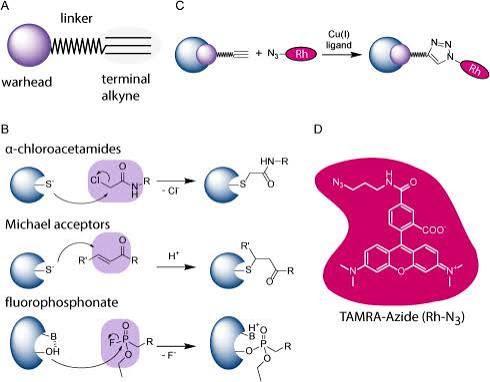
Irreversible inhibition occurs when an inhibitor produces a persistent loss of enzymatic activity, often through covalent modification of the enzyme or another mechanism that prevents recovery of catalytic function.
The degree of inhibition depends on factors such as inhibitor concentration, exposure duration and enzyme susceptibility.
Investigating irreversible inhibition requires additional considerations because conventional equilibrium-based models may not adequately describe the underlying reaction mechanism.
Time-dependent inhibition studies can help characterize the rate and extent of enzyme inactivation.
5. Enzyme Kinetics and Michaelis-Menten Analysis
Enzyme kinetics examines the relationship between substrate concentration and catalytic reaction velocity.
The Michaelis-Menten model is one of the most widely used theoretical frameworks for describing the behavior of many enzymes under initial-rate conditions.
The Michaelis-Menten equation is expressed as:
v = (Vmax × [S]) / (Km + [S])
Where:
v represents the initial reaction velocity.
Vmax represents the maximum reaction velocity.
[S] represents substrate concentration.
Km represents the Michaelis constant.
The Michaelis constant corresponds to the substrate concentration at which the reaction velocity reaches half of its maximum value under the assumptions of the model.
5.1 Determination of Km and Vmax
Km and Vmax can be estimated by measuring initial reaction velocities at different substrate concentrations.
Experimental data are commonly fitted using nonlinear regression methods based on the Michaelis-Menten equation.
Accurate estimation requires appropriate substrate concentration ranges, suitable controls and measurements collected under conditions that preserve initial-rate behavior.
5.2 Inhibition Kinetics
Inhibition kinetics investigates how inhibitors modify the relationship between substrate concentration and enzyme activity.
By measuring reaction velocities at different substrate and inhibitor concentrations, researchers can distinguish between potential inhibition mechanisms.
The resulting kinetic parameters provide information about inhibitor behavior and support comparisons between different compounds.
5.3 IC50 and Ki Determination
The half-maximal inhibitory concentration (IC50) represents the concentration of an inhibitor required to reduce the measured enzyme activity by 50% under specified experimental conditions.
IC50 is frequently used during preliminary compound screening because it provides a practical measure of inhibitory potency.
However, IC50 is influenced by assay conditions, including substrate concentration and enzyme characteristics.
The inhibition constant (Ki) provides a more mechanistic measure of inhibitor affinity within an appropriate kinetic model.
These parameters should not be considered interchangeable, and comparisons between compounds require standardized experimental conditions.

Major Enzyme Classes Investigated in Pharmaceutical Research
Different enzyme families represent important research targets because of their involvement in cellular regulation, metabolism and disease-associated processes.
Kinases
Protein kinases regulate cellular signaling through phosphorylation of proteins. Kinase inhibition is an established research strategy in several therapeutic areas, particularly oncology and inflammatory disease research.
Proteases
Proteases catalyze protein degradation and processing. Their activity is involved in numerous physiological processes, including protein turnover, immune regulation and tissue remodeling.
Phosphatases
Phosphatases remove phosphate groups from proteins and other molecules. They play important roles in signaling regulation and cellular homeostasis.
Oxidoreductases
Oxidoreductases catalyze oxidation-reduction reactions and contribute to energy metabolism, oxidative balance and cellular biochemical pathways.
Hydrolases
Hydrolases catalyze the breakdown of chemical bonds through the addition of water. They include several important enzyme families involved in metabolism and molecular processing.
Transferases
Transferases catalyze the transfer of functional groups between molecules and participate in a wide variety of biochemical processes.
Conclusion
Enzyme activity and inhibition assays are fundamental tools in biochemical research and pharmaceutical discovery. They provide quantitative information about catalytic processes, enzyme-substrate interactions and the effects of potential inhibitory compounds.
Through spectrophotometric, fluorometric, colorimetric, luminescence-based and chromatographic approaches, researchers can investigate enzymatic function under controlled experimental conditions.
The integration of enzyme kinetics, inhibitor characterization, high-throughput screening and advanced analytical methods supports therapeutic target validation and the identification of promising pharmaceutical candidates.
As biochemical technologies and computational approaches continue to evolve, enzyme-based assays will remain essential for understanding biological mechanisms and advancing the scientific foundations of therapeutic discovery.
